
Introduction
Vintage Chinese tea sets from Teasetbox are more than just elegant collections of porcelain and art; they represent centuries of tea culture, artistic expression, and philosophical belief. These tea sets, often passed down through generations, carry stories and traditions that reflect the rich history of China, a country where tea is more than a mere commodity—it’s a way of life. This article delves into the intricate designs and colors of vintage Chinese tea sets, revealing hidden symbolism in their patterns. Using motifs like dragons and phoenixes and culturally significant colors, each element is crafted to convey meaning. Whether you’re a tea lover, collector, or simply curious, explore the art and culture behind these exquisite pieces. Discover the stories and appreciate the artistry that defines each unique tea set.
Historical Context of Chinese Tea Sets
The history of Chinese tea sets is as rich and complex as the culture of tea itself. Tracing back to the Han Dynasty (206 BC – 220 AD), the art of tea drinking has been deeply woven into the fabric of Chinese society. Initially, tea was primarily a medicinal brew, but gradually evolved into a cultural cornerstone, influenced by the philosophy of harmony and tranquility espoused by Confucianism and Taoism.
1. The Evolution of Tea Sets
Tea consumption saw significant development during the Tang Dynasty (618 – 907 AD), when it became a common social activity. During this period, the first dedicated tea utensils began to emerge, made primarily from porcelain and stoneware. The invention of porcelain, an exquisite type of ceramic, marked a significant leap in tea set production. This innovation led to the crafting of more refined and aesthetically pleasing tea vessels.
The Song Dynasty (960 – 1279 AD) further advanced tea culture by popularizing the practice of tea preparation known as “whisking,” which required specialized tea bowls. This era also introduced the concept of tea aesthetics, paralleled in the development of various artistic styles in tea set production. Intricate designs, including motifs from nature and symbolism reflecting spiritual beliefs, began to appear on tea wares.
2. Ming and Qing Dynasties: The Golden Age of Tea Sets
The Ming Dynasty (1368 – 1644 AD) heralded what many consider the golden age of tea culture, where the gaiwan—a three-piece lidded bowl—came into common use. This elegant piece of equipment allowed the drinker to appreciate the colors, aromas, and flavors of the tea with ease. Concurrently, an emphasis on the individuality and craftsmanship of tea sets emerged. Artisans often personalized their creations with unique glaze techniques and innovative designs.
In the Qing Dynasty (1644 – 1912 AD), tea sets became symbols of status and fashion among the aristocracy and upper classes. Exportation of Chinese tea and porcelain to the West introduced global audiences to the meticulous craftsmanship and ornate designs that characterize these sets. This period saw an explosion of creativity in the patterns and styles that decorated tea sets, ranging from delicate floral motifs to dramatic, imperial colors.
3. Cultural Significance
Tea sets have always been more than functional objects in Chinese society—they are vessels for cultural expression and philosophical ideals. Each dynasty contributed its distinctive artistic flair, perpetuating a legacy that extends beyond practical use. Whether through the vibrant blue-and-white pottery of the Ming or the elegant simplicity of Song aesthetics, Chinese tea sets encapsulate the historical and cultural progression of a society that holds tea culture in high esteem.
In conclusion, the historical context of Chinese tea sets is one defined by innovation, artistry, and cultural depth. These sets serve as tangible reflections of Chinese history and continue to hold an esteemed place in both the art world and everyday life. As you explore the world of vintage Chinese tea sets, consider the intricate history that each piece represents—a story of tradition, beauty, and cultural significance.
Common Patterns in Vintage Chinese Tea Sets
Vintage Chinese tea sets are a rich tapestry of patterns and motifs, each carrying its own symbolic significance and reflecting the aesthetic preferences of the time. These patterns are not merely decorative but serve as a conduit for cultural expression and storytelling. Here are some of the most common patterns found in vintage Chinese tea sets:
1. Floral Motifs
One of the most prevalent designs, floral motifs symbolize growth, harmony, and the beauty of nature. Peonies, known as the “king of flowers,” frequently appear on tea sets and represent wealth and honor. Chrysanthemums, associated with nobility and endurance, also adorn many pieces, offering a touch of autumnal grace.
2. Dragons and Phoenixes
Embodying power and prosperity, the dragon motif is a staple in many traditional Chinese designs. Coupled with the phoenix, which symbolizes renewal and good fortune, these motifs are often found in sets originating from affluent households, as they were believed to bring luck and prosperity to the owners.
3. Geometry and Abstract Designs
Geometric shapes and abstract patterns are another hallmark of vintage Chinese tea sets. These designs, often featuring intricate lines and symmetrical patterns, reflect the artistry and precision of Chinese craftsmen. They also often incorporate the Taoist principle of balance and harmony in their symmetry.
4. Blue-and-White Porcelain
Perhaps the most iconic of all Chinese tea sets, blue-and-white porcelain gained immense popularity during the Ming Dynasty. These sets are characterized by cobalt blue designs set against a white background, often depicting landscapes, historical scenes, or calligraphy. The balance of colors and intricate patterns embodies elegance and artistic mastery.
5. Nature and Landscapes
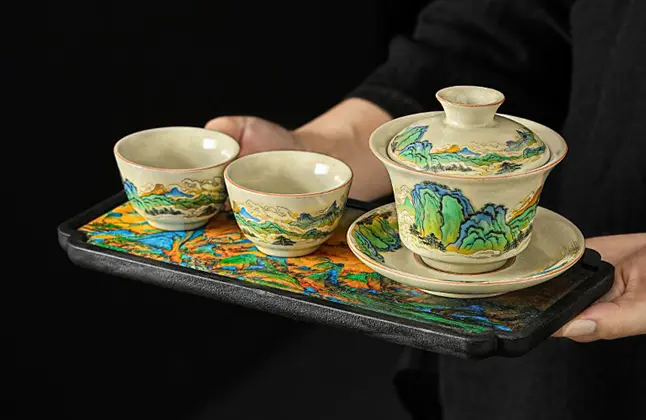
Reflecting the deep connection between Chinese culture and nature, many tea sets feature landscapes or scenes from nature. Mountains, rivers, and trees are common elements, representing tranquillity and the philosophical ideals of Taoism, where nature is seen as a source of inspiration and spiritual focus.
6. Mythical Creatures
In addition to dragons and phoenixes, other mythical creatures such as Qilin and tortoises may appear. The Qilin, often seen as a symbol of benevolence and peace, and the tortoise, representing longevity and stability, are woven into the designs to imbue the tea sets with auspicious meanings.
Each pattern on a vintage Chinese tea set not only adds to its aesthetic appeal but also tells a story steeped in history and tradition. Collectors and enthusiasts alike value these pieces not just for their beauty but for the rich cultural narratives they encapsulate. Whether used in everyday rituals or displayed as art, these tea sets maintain a cherished connection to the past.
The Significance of Color in Tea Sets
The colors used in tea sets go far beyond mere aesthetics; they carry deep cultural significance and symbolism, particularly in Chinese tea culture. Each hue is meticulously chosen to convey specific meanings, communicate emotions, and reflect the philosophical and spiritual undertones of the tea-drinking experience.
1. Red: Prosperity and Happiness
Red is a prominent color in many Chinese tea sets, symbolizing prosperity, happiness, and good fortune. Often used during celebrations and significant occasions, red is believed to ward off evil spirits and bring joy and success to the ceremony. This color’s vibrant appearance not only enhances the festive atmosphere but also aligns with traditional practices favoring optimistic symbolism.
2. Blue and White: Purity and Tradition
The classic blue-and-white porcelain tea sets represent purity, peace, and tradition. The cobalt blue, depicting intricate designs on a white background, is celebrated for its elegance and simplicity. These colors are deeply rooted in history and are often associated with the refined and noble aspects of Chinese art and culture. The contrast between blue and white also symbolizes clarity and wisdom, ideal for thoughtful tea ceremonies.
3. Green: Growth and Harmony
Green, widely regarded as the color of nature, renewal, and peace, plays a vital role in the aesthetics of tea sets. Green tea sets, particularly those made from green clay or rendered in shades of green glaze, evoke a sense of freshness and tranquility. This aligns perfectly with the calming and restorative rituals associated with tea drinking. In Chinese culture, green is also seen as a balancing color, promoting harmony and vitality.
4. Black: Elegance and Mystique
Black tea sets, often crafted from black clay or porcelain, exude an air of elegance and mystery. Black is associated with depth, sophistication, and strength, characteristics that enhance the tea-drinking experience by adding a sense of solemnity and introspection. In many cases, the use of black is intended to focus attention on the taste and aroma of the tea, allowing the subtleties of the flavor to take center stage.
5. Yellow: Royalty and Power
Historically, yellow was reserved for the emperor and the royal family. It signifies power, glory, and authority. A tea set adorned in yellow hues carries these connotations of regality and high status. Drinking tea from a yellow set is often seen as an homage to imperial tradition and a reminder of the tea’s historical significance as a rare luxury.
The use of specific colors in tea sets is a testament to the intricate layers of meaning infused in the art of tea-making. Each color tells a story and reflects an intention, enhancing the sensory and emotional depth of the tea-drinking experience. Whether chosen for their auspicious implications or their traditional roots, these colors play a crucial role in maintaining the cultural richness of tea ceremonies.
Regional Variations in Patterns and Colors
The rich tapestry of Chinese culture is vividly reflected in the regional variations seen in vintage gaiwan tea sets. Each region in China boasts unique artistic styles, materials, and techniques that contribute to the diversity of patterns and colors in these tea sets, offering a glimpse into the cultural nuances associated with tea drinking across the country.
1. Jiangxi Province: The Porcelain Capital
Jingdezhen in Jiangxi Province is often hailed as the porcelain capital of China, known for its exquisite crafting techniques and high-quality porcelain. Tea sets from this region frequently feature delicate floral patterns and traditional blue-and-white motifs. The iconic cobalt blue designs, often depicting nature scenes or mythical creatures, embody grace and elegance, showcasing the artisanal skills for which Jingdezhen is renowned.
2. Yixing: The Birthplace of Purple Clay
Yixing, located in Jiangsu Province, is renowned for its unique purple clay (zisha) teapots, and this tradition extends to gaiwan tea sets as well. These sets typically highlight earthy tones like reddish-brown, deep ocher, and purples. The natural, unglazed finish of Yixing clay is celebrated for its ability to enhance the flavor and aroma of tea over time, as the clay absorbs the essence of the tea. Patterns on Yixing ware often include intricate carving and calligraphy, lending them a rustic yet sophisticated charm.
3. Guangdong: The Vibrant Palette
In contrast, tea sets from Guangdong Province, especially those originating from the Chaoshan area, are distinguished by their vibrant colors and lively designs. Multicolored glazes and intricate hand-painted scenes portraying daily life, landscapes, or symbolic animals are common elements. These gaiwan sets radiate a sense of dynamism and playfulness, reflecting the energetic spirit of the region.
4. Fujian: The Subtle Elegance of Blanc de Chine
Fujian Province, particularly the Dehua area, is famous for its Blanc de Chine porcelain. These white, minimally decorated gaiwans are prized for their purity and elegance. The monochromatic simplicity emphasizes the fine craftsmanship involved, and the subtlety allows the tea itself to take center stage, unencumbered by ornate design.
5. Tibetan Influences: Spiritual Symbolism
In regions with Tibetan influences, such as parts of Sichuan and Qinghai, tea sets often integrate symbols of spirituality and nature. The use of vibrant, contrasting colors, along with designs depicting lotus flowers, dragons, and Tibetan motifs, imbues these sets with a sense of cultural depth and spiritual significance, enhancing the meditative quality of the tea ceremony.
The regional variations in patterns and colors of gaiwan tea sets are more than mere aesthetic differences; they are an expression of the diverse cultural identities within China. Each set tells a story, capturing the essence of its origin, and invites tea drinkers to experience a piece of Chinese heritage with every sip.
Symbolism in Shape and Material
The design of a gaiwan tea set is deeply imbued with symbolism, where both shape and material play crucial roles. Understanding these elements can enhance one’s appreciation for this traditional style of tea drinking.
1. The Shape: Harmony and Balance
The classic shape of a gaiwan, which includes a bowl, lid, and saucer, holds profound symbolic significance. The three components represent harmony and balance—central tenets in Chinese philosophy. The lid signifies the heavens, while the saucer symbolizes earth, and together they encase the bowl, representing humanity. This trinity reflects the balance between these forces, highlighting the interconnectedness of the universe. When using a gaiwan, the act of skillfully balancing the lid to pour tea without spilling becomes a mindful practice that embodies the pursuit of harmony.
2. Material Significance: Tradition and Purity
The materials used in crafting a gaiwan tea set often carry symbolic meanings related to tradition and purity. Porcelain, one of the most common materials, is cherished for its purity and elegance. Its delicate nature signifies the fragility and beauty of human life and the importance of mindfulness in every action. Yixing clay, another popular material, symbolizes tradition due to its long history and unique properties. This clay is known for its ability to absorb the essence of tea, making each brew richer over time. The transformation of the clay parallels the deepening wisdom and growth one experiences through consistent practice and reflection.
3. Decorations: Cultural Stories and Beliefs
The designs and motifs found on gaiwan tea sets also bear cultural significance. Patterns like dragons, phoenixes, flowers, and landscapes are not merely decorative; they convey stories, beliefs, and values. Dragons symbolize power and good fortune; phoenixes represent rebirth and harmony; floral motifs often stand for seasons or beauty. Each sip from a gaiwan with such imagery is a step into the layers of Chinese culture, inviting the drinker to explore the stories and wisdom passed down through generations.
By appreciating the symbolic dimensions of the shape and materials in a gaiwan tea set, one not only enjoys a cup of tea but also engages in a rich cultural tradition where philosophy, art, and simplicity converge. This deepened understanding transforms a simple tea session into a meditative experience, fostering greater awareness and connection to history and heritage.
Interpreting Hidden Messages
In the intricate world of vintage Chinese gaiwan tea sets, every detail is laden with meaning, waiting to be discovered by those who partake in the culture of tea drinking. The hidden messages embedded within these tea sets are a testament to the artistry and profound symbolism deeply rooted in Chinese culture.
1. Symbolic Imagery: Conveying Tales and Values
The decorations on a gaiwan tea set are not only visually appealing but are rich with symbolism. For example, a set adorned with images of dragons and phoenixes speaks to the balance of yin and yang, power, and prosperity. Dragons, revered creatures in Chinese mythology, are symbols of strength, good luck, and authority, while phoenixes represent renewal and harmony. Together, they narrate a story of balance and positive transformation.
Floral patterns, such as plum blossoms, lotus, or chrysanthemums, serve as metaphoric messages of resilience, purity, and longevity, respectively. Each flower captures a specific aspect of life that is emphasized in Chinese philosophy and serves as a gentle reminder to embody these virtues.
2. Calligraphy: Words with Wisdom
In addition to pictorial motifs, many vintage gaiwan tea sets incorporate Chinese calligraphy, which often features proverbs or poems. These inscriptions typically offer wisdom or insights about living in harmony with nature or embracing the cyclical nature of life. Engaging with these verses while enjoying a cup of tea invites reflection and introspection, making the tea-drinking experience more profound and enriching.
3. Color Symbolism: Beyond Aesthetic Appeal
The colors used in the decoration of a gaiwan tea set are not chosen arbitrarily; they convey deeper meanings. Red is often used to symbolize joy and good fortune, while gold represents wealth and richness. The use of these colors is intentional, designed to impart specific sentiments and blessings to the tea drinker.
By unraveling these hidden messages, tea enthusiasts not only appreciate the beauty of their gaiwan sets but also connect with traditional Chinese values and philosophies. This understanding elevates the routine act of drinking tea into a culturally rich experience, enriching the soul and opening gateways to centuries-old stories and beliefs.
The Modern Appreciation of Vintage Chinese Tea Sets
In today’s globalized world, vintage authentic chinese tea set from China, particularly the elegant gaiwan, are experiencing a resurgence in popularity among tea connoisseurs and collectors alike. This renewed interest stems from an appreciation for the sets’ intricate artistry and historical significance, as well as the meditative experience they offer.
1. Aesthetic Appeal and Craftsmanship
Modern admirers are drawn to the exquisite craftsmanship and unique beauty of vintage gaiwan tea sets. Each piece is a testament to historical artisanal techniques, often crafted by skilled artisans whose techniques have been passed down through generations. The intricate designs and detailed motifs invite admiration for their artistic complexity and the sheer skill required to produce them. Using a vintage gaiwan elevates the tea-drinking experience, transforming it into a ritual that celebrates both beauty and functionality.
2. Cultural Connection and Nostalgia
For many, vintage Chinese tea sets evoke a sense of nostalgia, offering a tangible connection to a rich cultural heritage. As people around the world seek to reconnect with cultural roots or explore new cultural traditions, these tea sets serve as bridges to another time and place. They act as reminders of the stories, philosophies, and values embedded in Chinese culture, encouraging a deeper understanding and appreciation of these elements.
3. Mindful Tea Practices
The act of preparing and drinking tea with a gaiwan is inherently meditative, promoting mindfulness and intentionality. In a fast-paced world, many individuals find solace in the slow, deliberate motions of brewing tea the traditional way. This practice promotes a moment of calm and can be considered a form of tea meditation, helping to reduce stress and enhance well-being.
4. Sustainability and Durability
Sustainability is crucial in today’s consumer choices, and vintage gaiwan sets embody this. Made from durable materials like porcelain or jade, these sets can last generations, appealing to those who prioritize sustainability over disposables. Modern admiration for vintage Chinese tea sets extends beyond the items themselves, embracing history, culture, and mindfulness. Collectors and tea enthusiasts worldwide cherish these elegant sets, ensuring their cultural legacy continues.
Conclusion
In conclusion, the charm of the vintage Chinese gaiwan lies in its blend of artistry, heritage, and function. Its design enhances tea flavors and connects us to traditions spanning centuries. Enthusiasts engaging with the gaiwan partake in living history, appreciating craftsmanship and tea art. The gaiwan encourages mindfulness, turning tea making into a calming ritual. As sustainability gains importance, the durable gaiwan symbolizes enduring quality and ethical choice. Beyond a mere tea tool, it embodies appreciation for cultural richness and sustainable artistry, captivating past and future generations in tea culture.
Also Read-Food and Beverage Inventory Management Software: Compliance Made Easy