
In the ever-evolving landscape of digital filmmaking, the demand for flexible, cost-effective, and time-efficient post-production tools has never been higher. Among the most transformative innovations is video face swap—a technology that allows creators to digitally replace one person’s face with another in moving footage. Once confined to deepfake experiments or meme culture, video face swap has matured into a professional-grade solution, especially with platforms like PixNova leading the charge. This blog explores how PixNova’s video face swap capabilities are not just a novelty but a powerful auxiliary tool in modern film and television production, offering filmmakers unprecedented creative control without compromising realism or budget.
Why Video Face Swap Is a Game-Changer for Film Production
Seamless Actor Replacement Without Reshoots
One of the biggest pain points in film production is the need for reshoots due to scheduling conflicts, performance issues, or last-minute casting changes. Traditionally, this meant costly delays and logistical nightmares. With PixNova’s video face swap, directors can replace an actor’s face in existing footage with minimal effort. Whether it’s swapping a stunt double’s face for the lead actor’s during high-risk sequences or correcting minor continuity errors, this tool eliminates the need to bring cast and crew back on set.
Preserving Creative Vision While Reducing Costs
Film budgets are often stretched thin, especially for indie productions. Video face swap technology reduces reliance on expensive VFX pipelines or complex makeup prosthetics. For example, aging or de-aging characters—a common requirement in biopics or fantasy genres—can now be achieved through precise facial mapping rather than hours of manual CGI work. PixNova’s algorithm ensures lighting, skin texture, and micro-expressions align naturally with the original footage, preserving the director’s vision while staying within budget.
Accelerating Post-Production Timelines
Post-production is notoriously time-consuming. Tasks like ADR (automated dialogue replacement) or visual cleanup can take weeks. By integrating video face swap early in the editing phase, editors can resolve inconsistencies faster. PixNova processes high-resolution video quickly, allowing teams to iterate and finalize shots in days rather than months—critical for streaming platforms with aggressive release schedules.
Practical Use Cases of Video Face Swap in Filmmaking
Casting Adjustments After Principal Photography
Sometimes, test screenings reveal that a particular actor doesn’t resonate with audiences, or rights issues emerge post-shoot. Instead of scrapping entire scenes, producers can use video face swap to insert a new performer’s likeness onto the original body performance. PixNova’s temporal consistency ensures the swapped face moves naturally across frames, maintaining emotional authenticity.
Stunt Integration with Lead Actor Likeness
Stunt performers execute dangerous maneuvers, but audiences expect to see their favorite stars throughout the action. Traditionally, this required careful camera angles or green-screen compositing. Now, video face swap allows seamless grafting of the lead actor’s face onto the stunt double’s body—even in dynamic, fast-paced sequences—without breaking immersion.
Historical or Biographical Accuracy
When producing period pieces or biopics, filmmakers often struggle to find actors who closely resemble real historical figures at every life stage. Video face swap enables subtle morphing between actors or even direct application of archival photo references (with ethical permissions), ensuring visual fidelity to the subject’s actual appearance over time.
Multilingual Dubbing with Facial Sync
Global distribution demands localized versions of films. However, traditional dubbing often results in mismatched lip movements. Advanced video face swap tools like PixNova can adjust mouth shapes and facial articulations to match the dubbed audio track, creating a more authentic viewing experience for international audiences.
Continuity Fixes Across Shooting Days
Actors may change hairstyles, gain/lose weight, or suffer injuries between shooting days, causing continuity errors. Rather than relying on clever editing or wardrobe tricks, editors can use video face swap to standardize appearances across non-contiguous scenes, ensuring visual coherence.
Concept Testing and Previsualization
During pre-production, directors can experiment with different casting choices by applying candidate faces onto placeholder footage. This “digital screen test” helps stakeholders visualize final outcomes before committing to contracts, reducing casting risks and enhancing collaborative decision-making.
Key Features That Set PixNova’s Video Face Swap Apart
High-Fidelity Facial Reconstruction
PixNova leverages deep neural networks trained on diverse facial datasets to capture nuanced expressions, skin tones, and lighting conditions. Unlike basic face-swapping apps that produce uncanny or distorted results, PixNova maintains anatomical accuracy—even under challenging conditions like low light or partial occlusion.
Real-Time Preview and Frame-by-Frame Editing
The platform offers an intuitive interface where users can preview swaps in real time and fine-tune alignment, blending intensity, and edge softness on a per-frame basis. This level of control is essential for cinematic quality, where even a single glitch can break viewer immersion.
Batch Processing for Long-Form Content
Films and TV episodes contain thousands of frames. PixNova supports batch processing with automatic scene detection, allowing users to apply consistent face swaps across entire sequences while preserving shot-specific adjustments. This scalability makes it viable for feature-length projects.
Ethical Safeguards and Consent Verification
Recognizing the potential for misuse, PixNova integrates digital watermarking and requires user verification for commercial projects. It also provides tools to blur or restrict output if consent documentation is incomplete—aligning with industry standards for responsible AI deployment in media.
Conclusion: Video Face Swap Is Redefining Creative Possibilities in Film
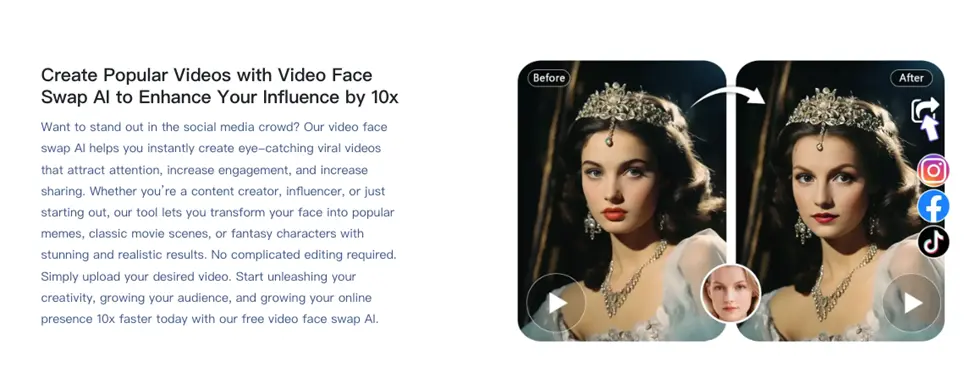
Far from being a gimmick, PixNova’s video face swap represents a paradigm shift in how stories are told and refined on screen. By bridging the gap between practical limitations and artistic ambition, it empowers filmmakers to iterate faster, adapt smarter, and deliver more compelling narratives—all while respecting ethical boundaries and production realities. As AI continues to evolve, tools like PixNova won’t replace human creativity; they’ll amplify it, making high-quality filmmaking more accessible than ever before.
Also Read-Master the Art of Paper Scoring Creaser Techniques